Collection: Hishika Jiro Bessho Handmade Japanese Saws

These are among the finest pull saws made at this price, anywhere. Hishika's Bessho Jiro saws are a contradiction: replaceable-blade, yet hand-forged and hand-finished by a third-generation smith and his master craftsmen. That level of quality is normally reserved for smith-made saws given full metate. The handwork makes a saw that cuts faster and cleaner than other pull saws, at a fraction of the price of other smith-made blades. They track straight and cut clean, which saves time and frustration. We are the only US stockist.

Which saw do you need?

There are many types of Japanese pull saw, each suited to different work. If you want just one, we recommend a 240mm ryoba, or a 210mm hardwood kataba if you work mostly in hardwoods. The hardwood kataba rips and crosscuts equally well.

Types we carry

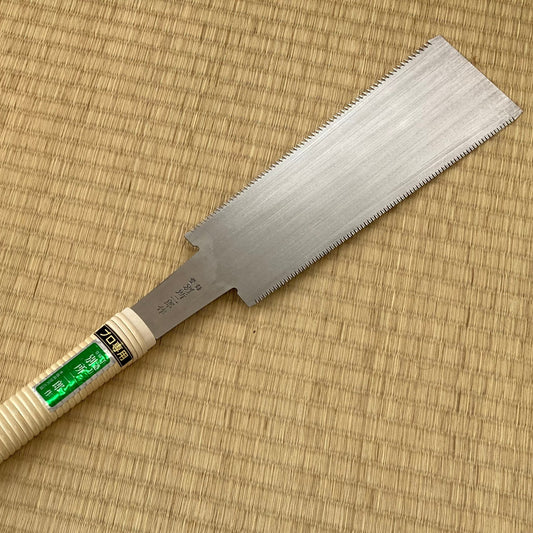
  • Ryoba: general-purpose double-sided saw, with rip teeth on one side and crosscut on the other.
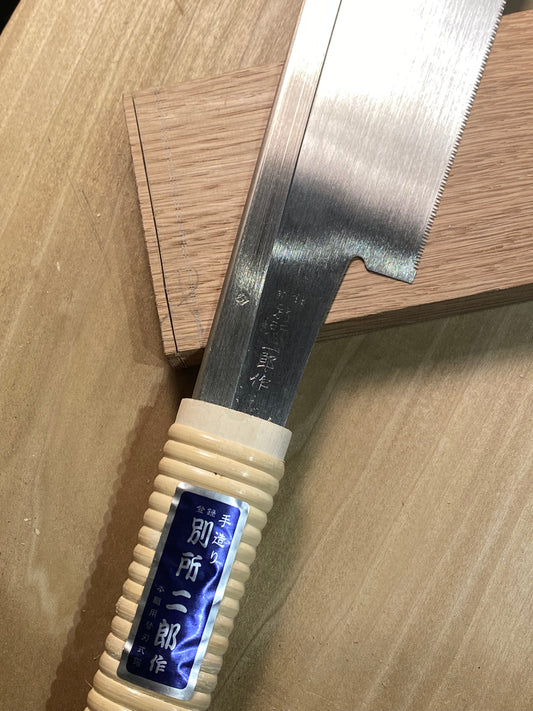
  • Dozuki: a thin crosscut blade with a stiffened back, for tenon shoulders and joinery that needs a near-perfect finish.
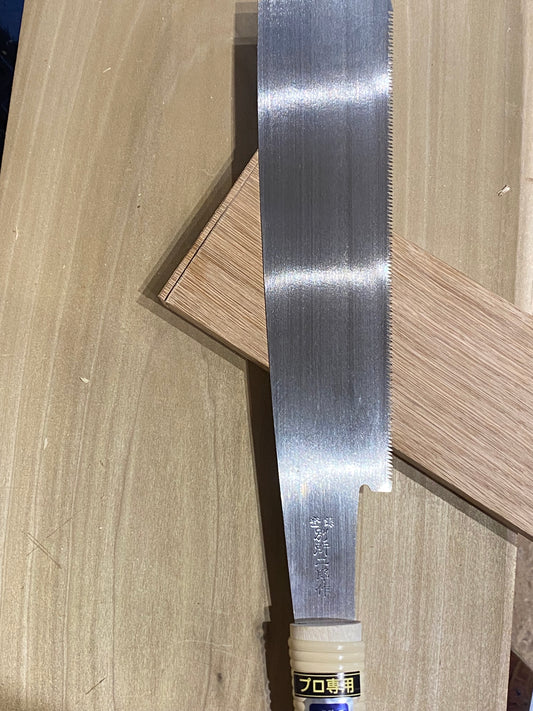
  • Kataba: single-edged for full-depth cuts with no spine in the way. Our pro series and hardwood kataba use a geometry that rips and crosscuts with one blade.
  • Azebiki: a curved edge for starting a cut in the middle of a board, used for stopped dadoes and sliding dovetails.
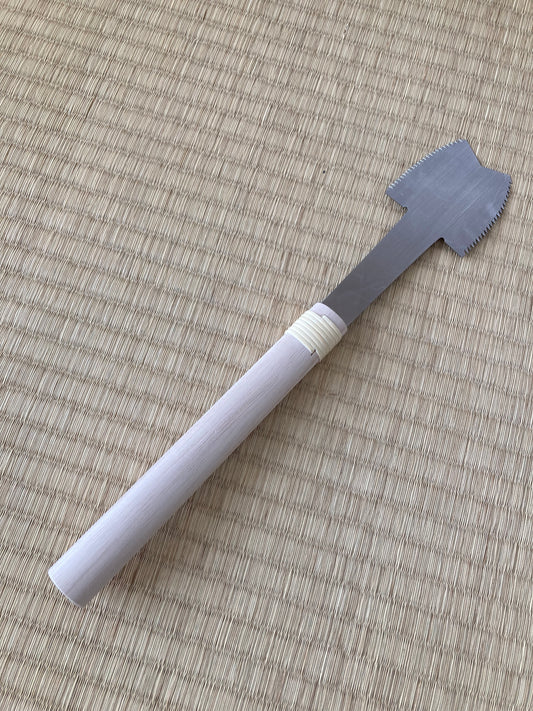
  • Flush-cut (180mm): a flexible, zero-set blade for trimming dowels and proud joinery flush.

What you're paying for

Why they cut better: the blades are taper-ground, tang to toe and edge to center, and the tooth set is tapered too. The saw clears its own kerf and tracks straight, so cuts come faster and truer than a machine-made saw. That is the point of the handwork, and you feel it in use.

Why they last: the whole saw is hardened by hand to around HRC 60 for long edge retention. Other pull saws use cheaper, softer steel and impulse hardening. Because these are not impulse-hardened, you can resharpen them. When you would rather swap than sharpen, the blades are replaceable. They are made by master craftsmen in Miki City, Japan's traditional toolmaking region.

One caveat, the same on every page: natural wood only. Plywood, MDF, and anything with glues or epoxies will damage the teeth.

Want the detail on why hand-filed teeth cut differently from machine-set ones? We wrote that up here.
Frequently Asked Questions

Why do Japanese saws cut on the pull stroke? What are the advantages?

Cutting on the pull stroke makes the blade easier to control and ensures that the saw cuts in a straight line, as each tooth is being pulled out of the cut.

Do Japanese saws work on hardwood? I heard they're for softwoods only.

Yes they do work on hardwood, and there are even dedicated hardwood saws.

It is true that most Japanese saws have a "general purpose" tooth which is optimized for softwoods, but most users find that general purpose saws work fine on domestic hardwoods. If you expect to be doing much work on exotic hardwoods, a dedicated hardwood saw is a sound investment.

What are the main types of Japanese saws and what is each used for?

The most common in the world of furniture making and general carpentry are:

  • Ryoba - general purpose double-bladed saws, basically the "jack of all trades" in Japanese carpentry. Ryoba means "double-bladed".
  • Dozuki - very thin, very fine tenon saw with a rigid back used for precise work where accuracy really matters. Most commonly used for cutting the shoulders of tenons, which are often very visible. "Dozuki" means "with a spine", referring to the stiff back.
  • Kataba - contrasted with ryoba, kataba means "single edged". Kataba are similar to most western saws, in that they are typically dedicated to a single purpose (rip cutting, cross cutting, etc).
  • Azebiki - azebiki are a type of ryoba with a curved blade. The curve allows you to begin a cut in the center of a board, and are typically used for blind sliding dovetails. Azebiki means "ridge saw", referring to the curved contour of the blade.

What are the best woodworking hand saws to choose if you are a woodworking newbie?

For beginners we'd recommend a 180mm or 240mm Jiro Bessho Ryoba. Go with the 180mm if you're expecting to do lots of finer work and 240mm if you think you'll be doing timber framing or dimensioning lots of boards.

What makes handmade saws better than machine made saws?

For context: almost all Japanese handsaws available in the US are machine made from machine-rolled steel sheets that are too soft for use in woodworking. To make the teeth extra hard, they are impulse hardened and quenched by machine.

This means the body is a constant thickness (plus or minus manufacturing tolerance), and the teeth are more or less in a straight line. The teeth are also hard enough to grind away files, so they can't be sharpened.

Hand forged blades begin with blanks that are heated and worked repeatedly by a smith. This improves the steel's structure and makes the body harder and able to retain an edge.

The teeth are typically cut by machine, and initial grinding is done by machine. In Jiro Bessho's case, the body is also taper ground to improve the performance of the saw. Finally, the teeth are filed by hand and set in a subtle taper from heel to toe.

The tapering improves performance by ensuring that, when following the cut line, each tooth moves away from the edge of the kerf, allowing more precise cuts.

Because handmade saws are hardened by hand traditionally rather than impulse hardened by machine, they are soft enough to be filed but still hard enough to perform well for a long time between sharpening or replacement.