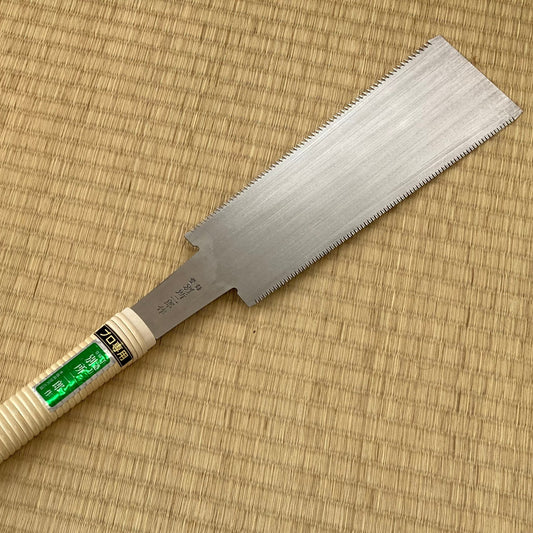
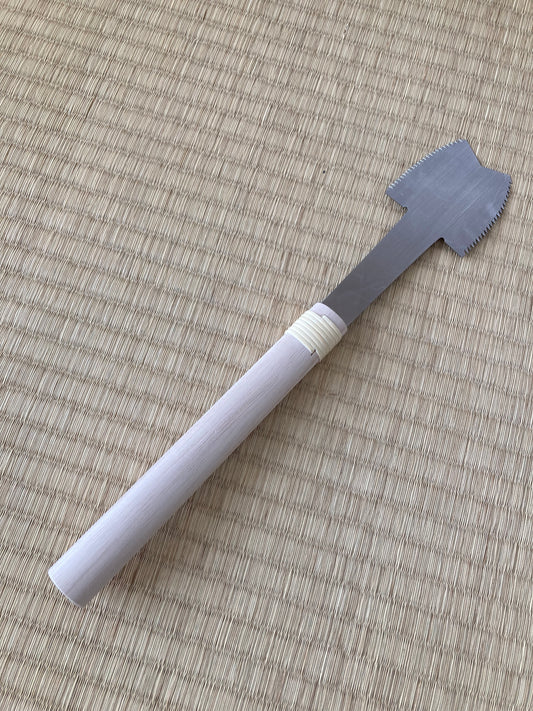
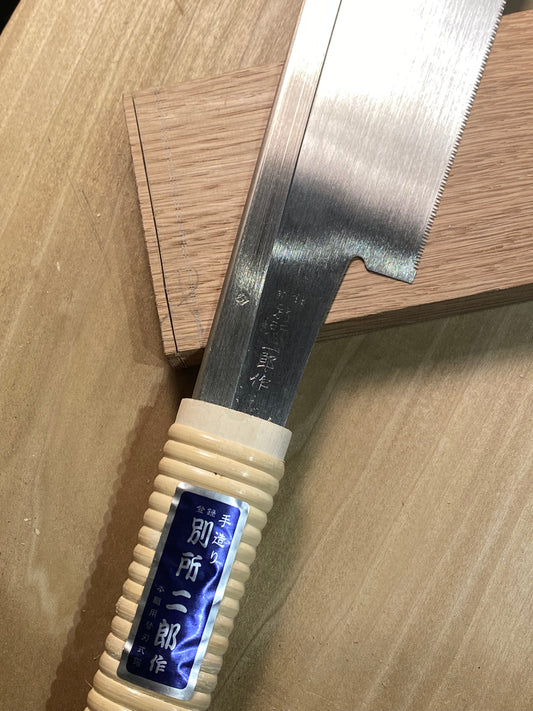
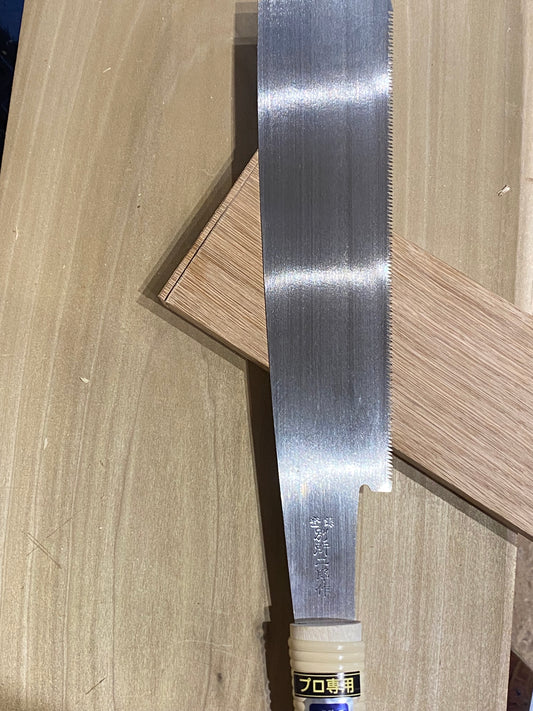
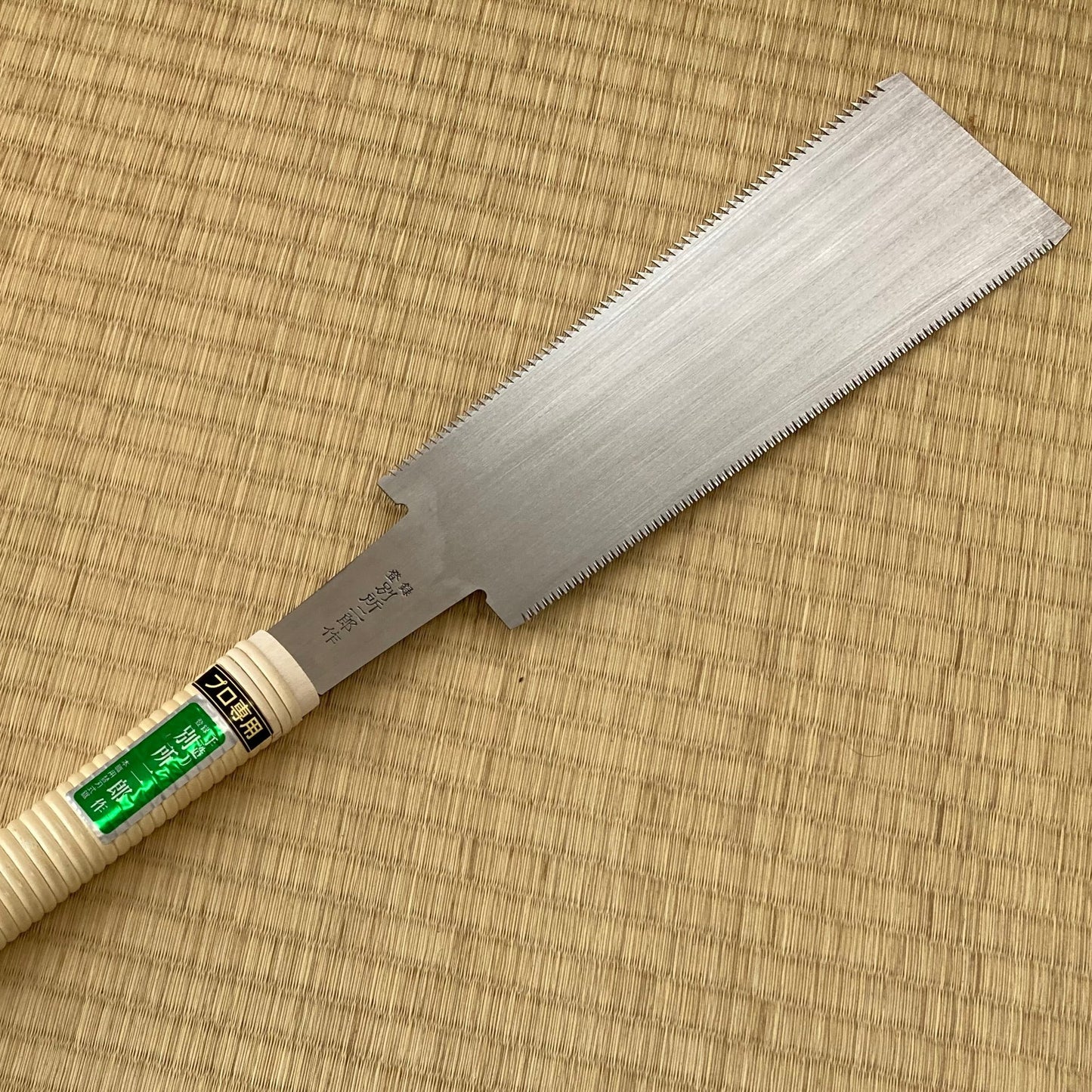
Jiro Bessho Ryoba - Precision Handmade Japanese Pull Saw
Our most popular saw. A ryoba saw has rip teeth on one edge and crosscut teeth on the other, so one saw handles any cut. If you are choosing your first hand-finished Japanese pull saw, this is the one to get.
240mm is a general-purpose size most people want first.
Hand-filed and hardened to about HRC 60. A replaceable-blade saw, so a worn or damaged blade is a part, not a write-off.
Customers love our saws
-

⭐⭐⭐⭐⭐
Michael, Finish Carpenter, Vermont
✅ Verified buyer
"I've been using the cheaper changeable-blade saws for 30 years... After two weeks with the handmade saw I like almost everything about it. Tracks very well to the scribed line, light and well balanced, fast cutting, and I can still change the blade when I think it's time."
-

⭐⭐⭐⭐⭐
Shop 240mm ryobaRichard, Arizona
✅ Verified buyer
"I already have one precision Bessho Jiro rip saw and it's my favorite for small furniture work. So far this small ryoba lives up to it: fine, accurate cuts with a light touch."
-

⭐⭐⭐⭐⭐
Shop dozukiRichard H., Arizona
✅Verified buyer
I already have two Jiro Bessho saws - one ryoba, one "rip cut". Both give extremely fine and accurate cuts. They have indeed been an improvement for the fine work I'm doing on the writing desk I'm making for my wife. Yesterday I pulled out this dozuki crosscut for the drawers. These have to be really accurate. My new Jiro Bessho dozuki performed perfectly in hard maple and african pear wood. I'm really happy in owning these.


Why Bessho Jiro saws work better
Machine made saws are made from rolls of steel; their teeth are stamped and set to a tolerance by machine: each saw tooth lands within tolerance of the previous tooth, but not in a perfect line.
So as you cut, one tooth might be further from the cutting line, and the next closer. You can't guarantee that teeth toward the end of the blade aren't closest to the line.
For rough and general cutting this is fine since the distances involved are well under 0.5mm. For fine work, though, the variance creates two issues: the cut wanders a little no matter what you do, and the blade drags in deeper cuts.
Bessho Jiro saws are different. Two concrete details improve their performance:
- The teeth are set in a V, so the blade narrows as it's pulled. As the saw cuts, each tooth moves further from the cutting line than the previous tooth. This ensures cut stays crisp and straight. You can actually control the saw.
- The saw plate is taper-ground. It's thinner the further you get from the teeth, so there is less friction and the saw pulls with less effort.
No handsaw can guarantee your cut will be perfectly straight: your skill is ultimately the deciding factor. But the saw can make your job easier and more enjoyable.
Honest questions, honest answers
Most Japanese saws cost $30-$40. Why is this more expensive?
A $35-$40 saw is almost entirely machine-made. It is stamped out of industrially-produced rolled steel, sharpened by CNC, and impulse-hardened, often with no hand work involved. This produces a saw that is cheap to produce but lacks many of the details that makes a great saw easy to use.
By comparison, see "How Jiro Bessho saws are made" below for details on the production process. Multiple skilled craftsmen produce each Bessho Jiro saw, and it has detailing that is only seen otherwise in saws that cost 4-5x the price.
How are Bessho Jiro saws different than other premium Japanese saws?
A higher price does not always buy better performance. Not naming any names, but some saws sold on the US market at a premium are (as far as we can tell) machine-made blades with nicer handles and a good story.
They cost more, but they are not significantly different from budget brands.
With Bessho Jiro saws, you are paying for work that can only be done by hand (see How Bessho Jiro saws are made below for more details).
Is this a collector's piece I'll be afraid to use? What if I break it?
Fully custom smith-made saw cost at least several hundred dollars and can feel too precious to use. Bessho Jiro saws are made for regular use. They sit in a practical middle ground: good enough for clean professional work, not so dear you leave them on a shelf. The teeth can be resharpened if chipped or broken, and replacement blades are much under $90 if needed.
That said, we've been selling these for over two years and have yet to have a customer need a replacement blade or request sharpening.
What are their downsides? Do they need special care?
- These saws are for natural wood only. Impulse-hardened blades are the correct tool for epoxies and engineered woods (plywood, melamine, chipboard, etc.).
- The steel is harder and thinner than machine-made blades. When deep in a cut take care not to bind the blade, as it can break if bent too far. They need very little force to cut well - if you find yourself gripping tightly, reassess.
- The blade is high-carbon steel and will rust if not kept dry. Wipe it with a soft cloth after use and keep it dry. A light coat of machine or camellia oil protects it for long-term storage.
I've heard Japanese saws aren't useful in hardwoods. Is that true?
No. This is a common misconception. The only saw we sell not suitable for hardwood is the 295mm ryoba, due to its size.
The majority of our saws have a general purpose tooth. This is optimized for softwood but is perfectly usable in hardwood.
If you work primarily in hardwoods and want something optimized for them, we recommend the hardwood kataba and hardwood dozuki. The teeth in these saws are hybrid teeth and will both rip and crosscut.
How Bessho Jiro saws are made
Each Bessho Jiro saw goes through a meticulous production and quality control process executed by traditional craftsmen, including third generation sawsmiths.

Cutting
Raw, unhardened steel is cut into the rough shape of the saw.
Hardening
Blades are heated in a furnace to approximately 800°C and quenched in rapeseed oil. Temperature is monitored by the smith using thermometers and careful observation of the steel's color.

Tempering
Since the steel is brittle after heat treatment, the smith tempers it using a proprietary process. This results in a saw blade that is both hard and durable.

Rough Distortion Correction
The tempering process warps the saw body. Imperfections are corrected by a skilled craftsman, ensuring the saw body is dead flat.
Tooth Cutting & Grinding
Blades are ground to their required thickness. Each saw is subtly tapered, making the cutting edge and heel of the saw thicker and the spine and toe thinner. Ryoba are thinned toward the center of the blade as well. Precise thickness varies depending on the saw.
Polishing
Marks from earlier steps are polished away, leaving a smooth, clean surface.
Sharpening & Quality Control
Each blade is visually and mechanically inspected for any errors. Teeth are sharpened by a skilled craftsman.

Set Correction
A specialized machine is used to set the saw's teeth. This reduces resistance during cutting, making it easier to cut. The size of the set affects the roughness and feel of the final cut surface.
Final Correction
Skilled craftsmen straighten each saw blade individually by hand.
Earlier steps (heat treatment, grinding, buffing, and sharpening) produced subtle distortions. Sawsmiths describe the saw making process as a "battle against distortion", as the blade must be corrected at multiple steps in the process.
After this final distortion correction, the saw is able to cut straight and perform as intended.
Final Inspection
Handles are attached, and the saw is visually inspected one final time.
Packaging & Shipping
Finished blades are packaged, wiped with oil, wrapped in a rust-preventing bag, and prepared for shipping.
Which Japanese pull saw should you get?
Just starting out? Not sure which type fits your work? We recommend a 240mm Japanese ryoba saw. It's our most popular saw and works well for anything from furniture to timber framing. Consider the 180mm ryoba for furniture-scale work.
-
Ryoba
Shop ryobaA ryoba saw has rip and crosscut teeth on one blade. A great all-around Japanese pull saw.
-
Dozuki
Shop dozukiA stiffened back keeps the thin blade straight for fine joinery cuts. Traditionally for tenon shoulders, but also a good dovetail saw. Crosscut and rip versions.
-

Kataba
Shop pro katabaTeeth on one edge, no back, so it can cut deeper than a dozuki. This pro-series kataba has a hybrid tooth made for rip, cross, and diagonal cuts.
-

-

Hardwood kataba
Shop hardwood katabaFiled and set for hardwood species like ash, walnut, oak, and tropical hardwoods.


Shop All Saws
-
Jiro Bessho Ryoba - Precision Handmade Japanese Pull Saw
Regular price From $90.00 USDRegular price -
Jiro Bessho Dozuki - Handmade Japanese Pull Saw
Regular price From $124.99 USDRegular price -
Jiro Bessho Azebiki - Handmade Japanese Pull Saw
Regular price From $60.00 USDRegular price -
Jiro Bessho Hardwood Dozuki - Precision Handmade Japanese Pull Saw
Regular price $90.00 USDRegular price -
Jiro Bessho Hardwood Kataba - Precision Handmade Japanese Pull Saw
Regular price $80.00 USDRegular price -
Jiro Bessho Pro Series Kataba - Precision Japanese Handsaw
Regular price $86.00 USDRegular price -
Handmade Bessho Jiro Rip Cut Dozuki (Hozohiki)
Regular price From $124.99 USDRegular price -
Jiro Bessho Kataba - Precision Handmade Japanese Pull Saw
Regular price $82.00 USDRegular price -
Jiro Bessho 180mm Flush Cut Saw - Precision Handmade Japanese Pullsaw
Regular price $70.00 USDRegular price